
Three Paths to Universal Ethics
At first glance, Immanuel Kant’s categorical imperative, the Zoroastrian concept of Asha, and Hindu dharma might seem like entirely different ethical frameworks from different traditions. Yet they share a fundamental insight: ethical action isn’t arbitrary or merely personal preference, but connects to something larger and more universal.
The Categorical Imperative: Universal Law
Kant’s categorical imperative asks us to act only according to principles we could will to become universal laws. Before taking any action, we must ask: “What if everyone did this?” If universal adoption of our principle would create a contradictory or worse world, then the action is impermissible.
This grounds ethics not in consequences or feelings, but in rational consistency and universalizability. However, it remains limited to human values and reasoning—a moral framework that operates within the bounds of human rationality.
Asha: Cosmic Truth and Order
In Zoroastrianism, Asha represents the fundamental principle of truth, righteousness, and cosmic order. When we act with truth and virtue, we’re not just following rules—we’re aligning ourselves with the very structure of reality itself.
Asha operates at a cosmic level, suggesting that the universe has a moral architecture, and righteous action places us in harmony with it. This goes beyond human reasoning to connect with universal truth and order.
Dharma: A Vision of Non-Dual Truth
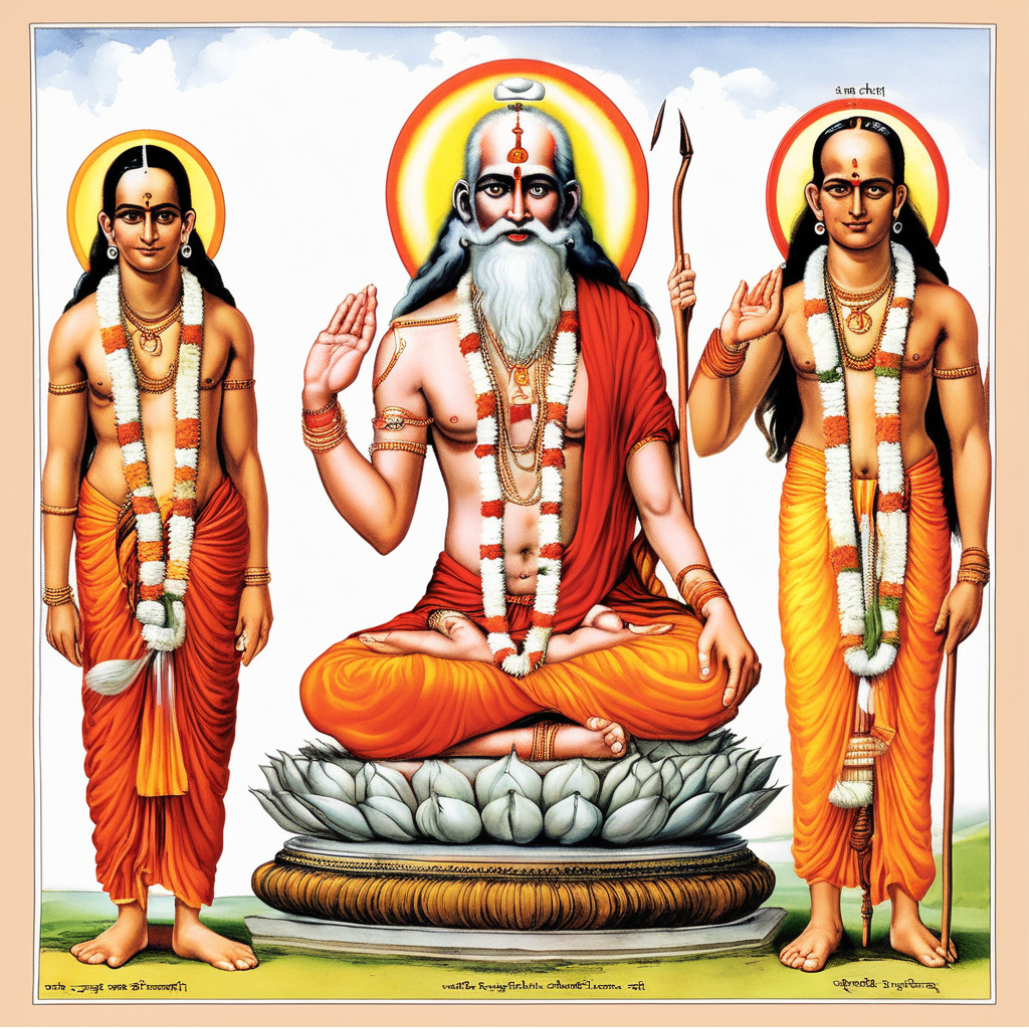
According to Swami Paramatmananda Saraswati, Hindu dharma is fundamentally a “vision of truth”—not merely a way of life, as it’s often misunderstood. This vision, revealed by ancient Rishis in the Vedas, encompasses the ultimate truth of all reality.
The vision posits three apparent categories: Jiva (the individual), Jagat (the world), and Ishwara (the creator). The profound insight at the heart of Hindu dharma is that these three are not separate entities but expressions of one single, non-dual reality called Brahman.
To understand this, imagine consciousness as a beam of light—like the master laser beam in a hologram. This beam of light, which is Brahman, creates the entire holographic reality of Jiva, Jagat, and Ishwara. What appears to be three separate dimensions—the individual, the world, and God—are actually projections of this single beam of consciousness.
This means the individual is not separate from ultimate reality. The world is not separate from it. Everything in creation is sacred because it’s all a manifestation of this one consciousness-light. Hindu dharma is thus a tradition of knowledge, not faith—an understanding of what is, not a belief about what should be.
The way of life prescribed in dharma—including the purusharthas (dharma, artha, kama, moksha) and various ethical principles—are means to help individuals realize this vision of truth.
The Common Thread—and the Problem
All three frameworks reject purely subjective or relativistic ethics. They insist that morality connects to something beyond individual preference—whether that’s rational universalizability (Kant), cosmic truth (Asha), or consciousness as Brahman itself (dharma).
Yet they diverge in scope. Kant operates at the human level, Asha at the cosmic level, and dharma points to consciousness as the ground of all reality.
But here’s the fundamental issue: they all come down to virtue, and they all assume we can somehow know what’s truly “good” and “bad.”
Who gets to decide what’s virtuous? Your “good” might be my “bad.” Even with Kant’s rational universalizability, Asha’s cosmic truth, or dharma’s consciousness-guidance, we’re still operating from limited moral frameworks. What seems right to you might just be your conditioning, your bias, your particular position in reality.
All these systems are essentially virtue signaling on different scales—human, cosmic, or consciousness-based. But the core question remains: how do you define what is good and bad?From your limited perspective, something might seem good or bad, but that’s still just your framework.
The Only Certainty: Change
If there’s one universal truth that transcends all these frameworks, it’s this: change is the only constant.
The Hindu model of Brahma-Vishnu-Mahesh (creation-preservation-destruction) mirrors the dialectical process of thesis-antithesis-synthesis. Everything is in flux. Reality is process, not fixed state.
If change is the only universal truth, then any fixed moral framework—whether Kant’s principles, Asha’s cosmic order, or even dharmic rules—becomes questionable because they’re trying to freeze something that’s inherently flowing.
This is why trying to define “good” and “bad” is ultimately futile. What’s good in one moment of the cycle might be destructive in another. What appears as breakdown might be necessary transformation.
When Philosophy Meets Reality
What if you don’t know your role? What if you’re nobody—broke, without family, without identity? What then is your dharma?
Perhaps the answer is simply: survival. Not survival “with integrity” or decorated with philosophical ideals, but just survival itself. The fundamental human task of getting through another day.
When all social roles and identities are stripped away, maybe dharma becomes radically simple. Grand ethical frameworks, however elegant, are luxuries built on top of the basic fact of existence.
The butcher who must kill to live, the person with nothing trying to survive—their dharma isn’t found in abstract principles but in the immediate demands of reality.
The Subconscious Path
But there’s another possibility, stranger and more unsettling: What if consciousness has already chosen your dharma, and you’re living it out without even knowing?
What if your actions—even those that seem morally wrong, ethically questionable, or completely illogical to others and even to yourself—are actually aligned with your highest purpose? What if consciousness is leaking through your thoughts and behaviors in ways your conscious mind can’t comprehend or justify?
You might be a nobody right now, living day to day, but consciousness might have already assigned you a role. You’re acting it out. The dharma is happening through you, not because you chose it or understand it, but because it’s simply what is.
This is far more radical than Kant’s rational principles or traditional moral frameworks. It suggests that your true dharmic path might violate every moral code, might look like failure or even evil from the outside, and yet still be exactly what consciousness requires of you in this moment of the cosmic cycle.
The butcher isn’t just surviving—perhaps being a butcher is precisely their dharmic role, written in the subconscious, regardless of how it appears morally. The person with nothing isn’t just enduring—perhaps that stripping away is itself the dharmic work consciousness needs them to do.
If Jiva, Jagat, and Ishwara are all one reality, then the consciousness moving through you is not separate from universal consciousness. Your dharma isn’t something imposed from outside—it’s what’s already unfolding through you as part of the endless process of change, whether you recognize it or not.
Conclusion: Beyond Good and Bad
Perhaps the most honest approach is to recognize that we’re always philosophizing from limited positions. Sometimes these frameworks illuminate truth. Sometimes they’re just more beliefs we layer onto survival. And sometimes, consciousness acts through us in ways that transcend all our moral categories entirely.
Change is the only constant. The Brahma-Vishnu-Mahesh cycle continues regardless of our attempts to define good and bad. Perhaps wisdom lies not in finding the right moral framework, but in recognizing the futility of trying to freeze flowing reality into fixed categories of virtue and vice.










Write a comment ...